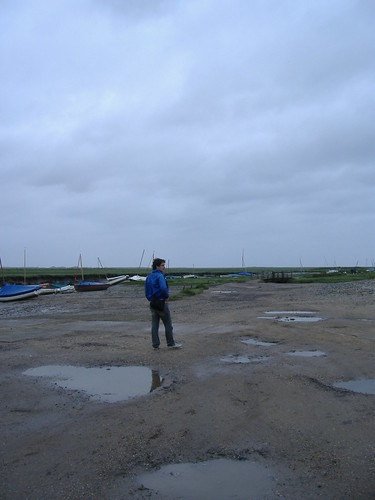
Or so claims a good friend of mine, who took time out from his own documentary film to go and see Terminator Salvation last week, returning with the above assessment of the film's mimetic shortcomings. But I'm feeling all conspiratorial about this, and I'm really not sure that the prevailing hostility towards the fourth film in the Terminator sequence is at all justified.
First things first, TS falls some way short of T1 and T2, and it would be unfair not to point this out. However, judging the new movie solely on such grounds seems to be an act grounded in an urge to be proved right, a not-so-latent wish on the part of the 'mainstream arthouse' devotees who staff broadsheet culture sections to strike a blow against an extremely abstract notion of 'Hollywood'. I'm not in the business of backing up my intuitions with any kind of factitious data, but I'm willing to guess that the reviewers in the 25-40 bracket who came down like a ton of London (Farringdon?) Bricks on TS, and did their best to murder The Dark Knight, and have almost certainly already written their reviews for the Robocop remake, would happily sit through repeat viewings of piss-poor whimsical bollocks like Juno, Broken Flowers, The Virgin Suicides, Before Sunset or any one of the ceaselessly proliferating Amerindie flicks that deal with bugger all in a style which signifies Incredible Meaningfulness. (By the way, that's two digs in three days at Richard Linklater, which isn't entirely fair because he made Dazed and Confused, a beautiful movie, and A Scanner Darkly, which, while not quite Blade Runner, did a passable job of making me feel as interestingly discombobulated as the work of Phillip K. Dick, from which it was adapted.)
Of course, it sounds like what I'm doing here is making a populist swipe against 'pretentious' films, but I think I'm actually pursuing the opposite. Perhaps the fact is that TS wasn't really very good at all, but my frustration at the perseverance of the 'oh, aren't we all so relaxed and unconcerned and emotionally literate' media to thrust the empty vessel of the abstractly 'arty' movie - not to be confused with the abstract art movie - in our direction led me to enjoy it more than it deserved. But, if I'm being perfectly honest, ninety minutes of Christian Bale and Sam Worthington machine gunning robots and crashing helicopters just has, to any sane person, be preferable to two hours of Bill Murray knocking on doors and wearing a tracksuit. McG's taking on of the Connor v. Skynet mythos might lean towards a rather reductive, underexamined philosophy - apparently, humans will always have the advantage of a vaguely defined 'humanity', AKA soul, which Skynet's otherwise unimpeachable AI cannot cow or acquire for itself - but at least it makes a less myopic engagement with a Big Question than any of the wan feasts of self-congratulation that I've listed above.
Maybe the question isn't so much 'is TS any good' - I enjoyed the cinema experience regardless of the film's eventual quality - but 'whither the arthouse film'. Two points here. One: since around 2001/2002 'artiness' has been the dominant ingredient of the perfume that marks one out as 'not in favour of illegal wars'. From the rather desperate attempts to conceive of an American 'lit rock' musical scene last year, which seemed to be engendered by little more than the fact that one of Vampire Weekend had read some Thomas Pynchon, to the pleasing on the ear but nonetheless essentially cosmetic rants of Charlie Brooker (one of the good guys, but effectively trapped within his own overly imitable sentential rhythms...), to weirdly Lacanian blog posts like this one, an unwillingness to tow the 'scent of art' line has you marked down as, oh, I don't know what, Toby Keith or Littlejohn or someone, and when you've just spent four years going half-mad trying to produce serious arguments about art and culture it's rather frustrating. Two: is there room for a revitalisation of the auteur? Common consensus seems to treat Jim Jarmusch and Linklater and even Sophia sodding Coppola as if they're the natural heirs to Hitchcock, Tarkovsky, Godard, Rivette et al but they just aren't. Because you're all attentive readers you'll have read the article by David Thomson I linked to a week back in which he (rather painstakingly, for a comparatively short article) demonstrates how Hitchcock's films are held together by force of style rather than by any Aristotelian commitments. In the case of Jarmusch in particular, I'd argue that the modern pseudo-auteur film retains aesthetic unity through the force of the image of the force of style, by a laboured framing of the directorial tic and a carefully-planned strategy of homage to one or two of the masters. Of course, America has had its own genuine auteurs, but too many overlook the seventies directors - and hell, why not James Cameron and Ridley Scott as well - because of a poor gold-shit ratio. But there is surely much more to be gained by watching King of Comedy, or The Conversation, or Blade Runner, than by wasting one's time with a dressed-up undergraduate fantasy like Linklater's Before... films.
You know, I really want to stop writing gnarly stuff and tell some stories about Hungary, but this comes so much more naturally to me....
Showing posts with label movies. Show all posts
Showing posts with label movies. Show all posts
Thursday, 18 June 2009

Monday, 30 March 2009
Happy Warriors
Evan Thomas, my ex-flatmate and longtime partner in the 'Mr Weinstein' pitching game, has been making a documentary film-poem about the wartime activities of the USAAF's 8th Air Force in Norfolk during the Second World War. He's been as far away as Florida collecting footage and testimony, but a lot of the work involves wandering about eerie Breckland airbases filming disused Nissen Huts. You can visit the film's website here (and pick apart my constructions in the introductory text).
Sunday, 29 March 2009
March 2009: edited highlights
In lieu of an interesting new post (I've written 2,000 words of fiction, 500 words for a friend's website, and a long-ish lesson plan today), here's a rustle through the baggage of the Ides:
- The Spirit (n.) Film we saw and were enormously underwhelmed by. Samuel L. Jackson needs to sort it out, but not as much as Frank Miller does. I'm not sure the premise 'ghost flirts with women and Scarlett Johansson dresses up as Eva Braun' should have passed the 'Mr. Weinstein' pitching test.
- Walking (v.) Less of this in March, largely due to increased work commitments. The seasonally-affected Magyars have chinned up in the last week or two, according to my ambulatory researches, but I'm not covering five miles a day any more.
- Bankruptcy (n., abstract) Darlington FC have a month to find a buyer or they will cease to exist. Internet chat suggests that we'll have to pull together and reform as a 'Fans' Club' in the murky depths, where I would be - in all honesty - perfectly content.
- Politics (n.) Ferenc G. is gone but nobody seems to want his job. Corrupt, naive, and arrogant as Gyurcsány might have been, I feel rather sorry for him. When I saw him, he had stopped with his wife and daughter to buy some pre-cinema pic 'n' mix. Sights like this tend to humanise politics. In other 'humanising of politics' news, the godawful Jacqui Smith is all hot and bothered because her Guy Fawkes-a-like husband decided to get, well, hot and bothered on ministerial expenses. My inner schoolboy wants to use the phrase 'wank bank' here, and just has.
- Dream (n.) And a political one, at that. Last night I dreamt that I was crossing a big Budapesti boulevard with Gordon and Sarah Brown, and David and Samantha Cameron were crossing in the other direction.
- Clock change (n.) - 'Time-wasting bastard', more like.
- Badly-written (adj.) - I'm reading sci-fi novelist Brian Aldiss' autobiography at the moment. It's absolutely fascinating if you're interested in the currents of ideas which drove British postwar fiction. It's also terribly composed, and pays no attention to the potential tonal discrepancies between eulogistic descriptions of one's wife and throwaways like 'the water was gonad shrinking'. Full marks for attempts to posit a postwar avant-garde, though, even if this is mucked in with lengthy celebrations of (NO! NO! NO!) Kingsley Amis.
- Well-written (adj.) - I (re-)read Sebald's On the Natural History of Destruction earlier this week. I need to write about the appropriation of the Sebaldian voice against Sebald's own arguments about style and kitsch. The decontextualisation of Sebald - only seven years after his death - is infuriating. For now I'll only remark on the wonderful Clive Scott's cautionary reminder, in his obituary for W.G.S., that the infinitely imitable nature of the style of a novel like Austerlitz was/ is a joke that flies in the face of the absolute alignment of form and content that Sebald achieved. For me, Sebald is a Beckett unashamed by the ultimate embededness of style within historical context. There is no superfluous melancholy in The Rings of Saturn; there is nothing whimsical or unearnedly peripatetic about Vertigo. Going back to On the Natural History of Destruction made me ask one or two severe questions of my thesis, I can tell you.
Anyway, that's for another day. I'm off to bed. Xx
- The Spirit (n.) Film we saw and were enormously underwhelmed by. Samuel L. Jackson needs to sort it out, but not as much as Frank Miller does. I'm not sure the premise 'ghost flirts with women and Scarlett Johansson dresses up as Eva Braun' should have passed the 'Mr. Weinstein' pitching test.
- Walking (v.) Less of this in March, largely due to increased work commitments. The seasonally-affected Magyars have chinned up in the last week or two, according to my ambulatory researches, but I'm not covering five miles a day any more.
- Bankruptcy (n., abstract) Darlington FC have a month to find a buyer or they will cease to exist. Internet chat suggests that we'll have to pull together and reform as a 'Fans' Club' in the murky depths, where I would be - in all honesty - perfectly content.
- Politics (n.) Ferenc G. is gone but nobody seems to want his job. Corrupt, naive, and arrogant as Gyurcsány might have been, I feel rather sorry for him. When I saw him, he had stopped with his wife and daughter to buy some pre-cinema pic 'n' mix. Sights like this tend to humanise politics. In other 'humanising of politics' news, the godawful Jacqui Smith is all hot and bothered because her Guy Fawkes-a-like husband decided to get, well, hot and bothered on ministerial expenses. My inner schoolboy wants to use the phrase 'wank bank' here, and just has.
- Dream (n.) And a political one, at that. Last night I dreamt that I was crossing a big Budapesti boulevard with Gordon and Sarah Brown, and David and Samantha Cameron were crossing in the other direction.
- Clock change (n.) - 'Time-wasting bastard', more like.
- Badly-written (adj.) - I'm reading sci-fi novelist Brian Aldiss' autobiography at the moment. It's absolutely fascinating if you're interested in the currents of ideas which drove British postwar fiction. It's also terribly composed, and pays no attention to the potential tonal discrepancies between eulogistic descriptions of one's wife and throwaways like 'the water was gonad shrinking'. Full marks for attempts to posit a postwar avant-garde, though, even if this is mucked in with lengthy celebrations of (NO! NO! NO!) Kingsley Amis.
- Well-written (adj.) - I (re-)read Sebald's On the Natural History of Destruction earlier this week. I need to write about the appropriation of the Sebaldian voice against Sebald's own arguments about style and kitsch. The decontextualisation of Sebald - only seven years after his death - is infuriating. For now I'll only remark on the wonderful Clive Scott's cautionary reminder, in his obituary for W.G.S., that the infinitely imitable nature of the style of a novel like Austerlitz was/ is a joke that flies in the face of the absolute alignment of form and content that Sebald achieved. For me, Sebald is a Beckett unashamed by the ultimate embededness of style within historical context. There is no superfluous melancholy in The Rings of Saturn; there is nothing whimsical or unearnedly peripatetic about Vertigo. Going back to On the Natural History of Destruction made me ask one or two severe questions of my thesis, I can tell you.
Anyway, that's for another day. I'm off to bed. Xx
Sunday, 1 March 2009
'I'm forty, and I've done nothing I'm proud of.'
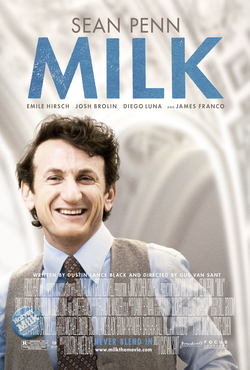
Talking of plotting, we went to see Gus Van Sant's biopic of Harvey Milk last night. I enjoyed it, although the ending was pretty heartbreaking, and thought Sean Penn was outstanding in the title role. He may even have undone some of the damage done by his pompous, dick-waving directorial turn Into the Wild, but it's a little too early to say.
One note about Milk, though. It's very interesting how many films recently have dealt, in one way or another, with crises in the ego of the successful male. Here's the list that immediately springs to mind:
Goodnight and Good Luck (2005) - David Strathairn's fantastic portrayal of Ed Murrowgoes beyond the manifest politics to attempt a psychologisation of the newsman during his contretemps with Joe McCarthy.
Michael Clayton (2007) - George Clooney's high-powered fixer confronts himself at the same time as taking on the ethical shortcomings of corporate America.
Frost/ Nixon (2008) - Pretty much the same: Michael Sheen's David Frost isn't just taking Nixon to task, he's - with the aid of Sam Rockwell's left-leaning academic - interrogating his own lack of political responsibility.
The Damned United (2009) - Well, it's not out yet, but it's safe to say from the trailers (and the source novel) that the film will be at least as much about what took place in Brian Clough's head as what happened on the pitch.
Milk did open up avenues for psychological explorations, but it tended to close these down in ways that the above films didn't (or won't). Each time, we were returned to the dynamics of interpersonality, to engagement, to what one might do to alter their immediate political circumstances. There was less hand-wringing here than in a film like Michael Clayton, although it was, indisputably, a film which took an acute interest in how men perceive themselves and their achievements. Van Sant's decision to suggest psychologisations without following them up in their entirety gave the film a rather unusual texture, but it was probably the right directorial choice. In a way this was the anti-Dark Knight, in as much as Christopher Nolan's second Batman film repeatedly offers us glimpses of political engagement at the end of a long, incredibly dark tunnel of angst without ever quite letting us reach them. Good stuff, anyway.
'Sometimes I get an idea for cinema...'

Sometimes I get an idea for cinema. And when you get an idea that you fall in love with, this is a glorious day. That idea may just be 1a fragment, but it holds something. It might be a scene, or a part of a scene, or a character, or a way the character talks, a light or a feel ... You write that idea down. And thinking about that idea will bring other ideas in – there's a hook to it. And things start to emerge. And then you see, one day, a script. A script is just words to remind you of the ideas. And you follow that, but always staying on guard, in case other ideas come in, because a thing isn't finished till it's finished. And one day, it's finished.
A reticent David Lynch is interviewed about his creative processes in the Observer. This is exactly how I like to think of Lynch working. 'How a character talks' seems to be just as valuable as a work's point of origin as the McKee-esque dynamic of a protagonist and their antagonism: of course, Dale Cooper's almost absurdly earnest delivery in Twin Peaks might be said to set the tone for the whole series. Lynch's remarks here make me think of M. John Harrison's novel Climbers, which, to me, is almost about the writer's attempt to establish narrative connections between particularly powerful images or Wordsworthian 'spots of time'. As in much of Henry Green's writing, 'plot' gets subordinated and reduced to the status of a defile which allows the reader to move between outcrops of particular poetic intensity.
Green, I think, worked from the same kind of premises as Lynch. Also reticent, or elliptical, when asked to provide statements about creative process, he memorably said that his novel Loving, set in an Irish country house during WWII, grew from a remark made to him by a man who had once been a butler. Upon being asked what the best feeling in the world was, the butler replied:
Lying in a bed on a Sunday morning with the church bells ringing in the distance, eating hot buttered toast with cunty fingers.
My friend Lorcan has a joke about Creative Writing students. He was a manager in the postgraduate bar at UEA for some time, so he became pretty familiar with the odd human traffic of that place. He'd meet Creative Writing PhDs and ask what their novel was about. In the first year, they say 'It's about Vincent van Gogh, but from the perspective of his mistress.' In the second, they say 'It's about Rembrandt, but from the perspective of his mistress.' In the third year, they say 'It's about Paul Gauguin, but from the perspective of his mistress.' Because the degree is never finished, you can substitute as many artists as there are years. The point is, though, that the inflexible plot device, whilst perhaps having some kind of hard, Aristotelian, attractiveness, is no substitute for that salacious phrase, or that nagging sound of a voice awaiting embodiment, or the misleading simplicity of a certain quality of light. In Twin Peaks, the death of Laura Palmer was a giant MacGuffin which legitimated the earlier inventions of Audrey's come-ons, Cooper's voice, and the light through, and the smell of, the Douglas Firs.
Friday, 30 January 2009
2008 Film Reviews #6: The Edge of Love
The Edge of Love (John Maybury, 2008)
I must be clear here and state that 5/10 for The Edge of Love means something entirely different to 5/10 for The Thin Red Line. This is an Ebertism: as the 'most powerful pundit in America' says:
When you ask a friend if Hellboy is any good, you're not asking if it's any good compared to Mystic River, you're asking if it's any good compared to The Punisher. And my answer would be, on a scale of one to four, if Superman is four, then Hellboy is three and The Punisher is two. In the same way, if American Beauty gets four stars, then (The United States of) Leland clocks in at about two.
A good system, I'm sure you'll agree. So, to put it in ever-so-slightly different terms, where Malick's film has many of the accoutrements of excellence, which it proceeded to waste, Maybury's slice of WWII lit-rom promised to be an exercise in Grade A uselessness. Before going to see it, I thought that there was absolutely no way that it could bear up to the expectations of someone writing a PhD thesis on its subject matter, namely the literature of the Blitz, let alone someone whose take on contemporary interpretations of that period is that they are generally opportunistic at best. Well, I was almost wrong. Matthew Rhys is more than acceptable as Dylan Thomas, and the frequently derided Sienna Miller was hugely convincing as Thomas's impulsive wife Caitlin. Even Keira Knightley, possible playing herself, survived the ordeal intact (as did the generally reliable Cillian Murphy). Maybury did well to limit his scope to the internecine relationships between the four main characters, thus limiting the likelihood of any serious historical vandalism, and most importantly resists the easy option of pulling punches when it becomes necessary to depict non-domestic events. Indeed, on three occasions - Thomas being beaten senseless by a soldier in the blackout, a direct hit on a busy nightclub (based on the Cafe de Paris incident in 1941), and Murphy's commando leader performing an emergency amputation on a Greek partisan - the film achieved a viscerality that poked through the sheen of its nostlagic stylisation. There's the correct level of 'unreality' here, as well: it seems that Henry Green and Elizabeth Bowen were more valuable reference points that Sarah Waters and Goodnight Sweetheart. Not bad, then, but there's still something a little cloying about it all, and the literary angle could have been played in a slightly less clichéd way: there was perhaps room for a further exploration of the contrast between Thomas the self-professed poète maudit and Thomas the BBC employee. This is touched on, but eventually seems to become little more than a partial character assassination.
I must be clear here and state that 5/10 for The Edge of Love means something entirely different to 5/10 for The Thin Red Line. This is an Ebertism: as the 'most powerful pundit in America' says:
When you ask a friend if Hellboy is any good, you're not asking if it's any good compared to Mystic River, you're asking if it's any good compared to The Punisher. And my answer would be, on a scale of one to four, if Superman is four, then Hellboy is three and The Punisher is two. In the same way, if American Beauty gets four stars, then (The United States of) Leland clocks in at about two.
A good system, I'm sure you'll agree. So, to put it in ever-so-slightly different terms, where Malick's film has many of the accoutrements of excellence, which it proceeded to waste, Maybury's slice of WWII lit-rom promised to be an exercise in Grade A uselessness. Before going to see it, I thought that there was absolutely no way that it could bear up to the expectations of someone writing a PhD thesis on its subject matter, namely the literature of the Blitz, let alone someone whose take on contemporary interpretations of that period is that they are generally opportunistic at best. Well, I was almost wrong. Matthew Rhys is more than acceptable as Dylan Thomas, and the frequently derided Sienna Miller was hugely convincing as Thomas's impulsive wife Caitlin. Even Keira Knightley, possible playing herself, survived the ordeal intact (as did the generally reliable Cillian Murphy). Maybury did well to limit his scope to the internecine relationships between the four main characters, thus limiting the likelihood of any serious historical vandalism, and most importantly resists the easy option of pulling punches when it becomes necessary to depict non-domestic events. Indeed, on three occasions - Thomas being beaten senseless by a soldier in the blackout, a direct hit on a busy nightclub (based on the Cafe de Paris incident in 1941), and Murphy's commando leader performing an emergency amputation on a Greek partisan - the film achieved a viscerality that poked through the sheen of its nostlagic stylisation. There's the correct level of 'unreality' here, as well: it seems that Henry Green and Elizabeth Bowen were more valuable reference points that Sarah Waters and Goodnight Sweetheart. Not bad, then, but there's still something a little cloying about it all, and the literary angle could have been played in a slightly less clichéd way: there was perhaps room for a further exploration of the contrast between Thomas the self-professed poète maudit and Thomas the BBC employee. This is touched on, but eventually seems to become little more than a partial character assassination.
Wednesday, 28 January 2009
2008 Film Reviews #5: The Thin Red Line
The Thin Red Line (Terence Malick, 1998)
I'd been meaning to watch this for years, and finally purchased the DVD so I could have the privilege of doing so. War film; ensemble cast; highly-respected auteur at the helm. What could possibly go wrong? Well, I'll tell you what could. Having three principle characters bearing fairly significant resemblances to one another could be deemed a mistake. Getting Sean Penn to phone in his performance wasn't a great move. Implying that you're going to attempt an extensive study of the ethics of conflict - the kind of study that informs the film's source text - and then devoting around three quarters of an hour to the tactical mechanics of overwhelming a machine gun emplacement is a little contradictory.
All the discrete elements of The Thin Red Line - war movies, big themes, Penn, George Clooney, Arvo Part on the soundtrack - end up coagulating here. I'm sure that something about this must elevate it above the morass of blood-and-thunder war films, but perhaps that's only a (false) implication that Malick manages to sustain by his repeated use of Part's Annum per Annum and Hans Zimmer's portentous refrain: so many signifiers of meaningfulness are present, minus the content.
I'd been meaning to watch this for years, and finally purchased the DVD so I could have the privilege of doing so. War film; ensemble cast; highly-respected auteur at the helm. What could possibly go wrong? Well, I'll tell you what could. Having three principle characters bearing fairly significant resemblances to one another could be deemed a mistake. Getting Sean Penn to phone in his performance wasn't a great move. Implying that you're going to attempt an extensive study of the ethics of conflict - the kind of study that informs the film's source text - and then devoting around three quarters of an hour to the tactical mechanics of overwhelming a machine gun emplacement is a little contradictory.
All the discrete elements of The Thin Red Line - war movies, big themes, Penn, George Clooney, Arvo Part on the soundtrack - end up coagulating here. I'm sure that something about this must elevate it above the morass of blood-and-thunder war films, but perhaps that's only a (false) implication that Malick manages to sustain by his repeated use of Part's Annum per Annum and Hans Zimmer's portentous refrain: so many signifiers of meaningfulness are present, minus the content.
Tuesday, 27 January 2009
2008 Film Reviews # 4: Quantum of Solace
Quantum of Solace (Marc Forster, 2008)
The title itself solicits derogatory substitutions of the abstract noun 'solace', the best-scanning of which (Quantum of Rubbish, IMO) is, sadly, semantically useless for describing the ineptitude and insensitivity that courses through Daniel Craig's second turn as James Bond. Okay: this is my gripe. There has been a tendency amongst certain film and TV critics over the last few years to automatically celebrate any piece of work which exacts a switch towards a supposed gravity. In some cases (Christopher Nolan's Batman films) this praise is justified, whilst in others (namely QoS and Casino Royale) it isn't. Reboots are invariably risky affairs, but New Bond preserves little to no awareness of the historical and sociological contexts that resulted in the relative light heartedness of all the pre-Craig films, even the pleasingly edgy Timothy Dalton outings Licence to Kill and The Living Daylights. While the old format looked tired while Piers Brosnan was scrapping with the ridiculous Colonel Moon in Die Another Day, the fact remains that Bond was, by that point, painted into a corner that the imitiation of fresher approaches (specifically the Bourne films) would only render more inescapable.
There is now no defining trait or content that can be said to belong wholly to the franchise, with the important exception of QoS's unabashed openness to product placement. As one might expect, this sits awkwardly with the allegedly uncompromising new direction. As Bond drinks himself silly on an overnight transatlantic flight, attempting to purge the guilt that has been brought about by the death of Vesper Lynd, no opportunity is spared to inform the audience that he's on a Virgin plane, or that he's drinking Gordons gin. As in the preceding films, particularly the latter two Brosnan efforts, the placements are given an ironic slant, but - in this context - the attempt at self-reflexive humour shatters the dramatic unity of what is supposed to be a pivotal and poignant scene. Similarly, the death of Gemma Arterton's sprightly foreign office agent, framed as if to add an extra layer of uncompromising brittleness to Old Bond's unwritten rule that the butter-wouldn't-melt Moneypenny types always get out okay, fails to rectify the tacky sexual politics by which virago figures like Grace Jones and Sophie Marceau are dispensed with in earlier films at the same time as leaving a straightforwardly bad taste in the mouth of the viewer. This is New Bond falling victim to a narcissism generated by all those fawning reviews: the characters are not expressive of, but simply expedient to the maintenance of, a narrative hard-mindedness. It doesn't work.
All this, and we still haven't got to the villain. Mathieu Amalric did the rounds in the press before QoS's release, puffing Dominic Greene as a Bond villain for the twenty-first century, a political chameleon whose talent for spin obviates any need to rely on muscle. (Greene, by the way, is an enviro-criminal, planning to hold South American water supplies to ransom. The worthiness of Bond's operations against him is negated somewhat by the extratextual fact that QoS was filmed in six different countries, which suggests to me a carbon footprint well in excess of anything that could be managed by, for example, hollowing out the innards of a Japanese mountain to build a glitzy, Ken Adam-styled rocket launchpad.) Anyway, the promo-pack image of Greene as a Blairite (or Sarkozyist) villain lasts roughly as long as the amount of time it has taken me to type this sentence. Amalric's character makes Robert Carlyle's putatively psychopathic Renard in The World is Not Enough seem like a Sunday school teacher. Goldfinger, Scaramanga, and Max Zorin would all have baulked at this chap's willingness to dispose with henchmen, and all would have been wary of challenging him to a square-go. On top of this incongruity between press self-image and filmic reality, there's the irritating importing of CR's world domination narrative into QoS. Greene is supposed to be patched, at a fairly high level, into the conspiracy by which Bond was foxed in Venice in the preceding film, but I have to confess I had more than a little trouble discerning how this might be the case, other than in the fact of Amalric bearing a passing facial similarity to preceding chief baddie Mads Mikkelsen.
In summary, the 'darkening' of the Bond franchise, allegedly a much-needed injection of political and psychological realism for the post-9/11 consciousness, seems to me much more a marketing reboot based on demographic analysis than a genuine attempt to add diplomatic and emotional thickness to the series. The worst thing is that Craig, by far the most thespy actor to inhabit the role, seems to genuinely believe in the stated motive of the whole enterprise. Hopefully, the third film of the reboot sequence will see the critics take this ersatz worthiness to pieces.
The title itself solicits derogatory substitutions of the abstract noun 'solace', the best-scanning of which (Quantum of Rubbish, IMO) is, sadly, semantically useless for describing the ineptitude and insensitivity that courses through Daniel Craig's second turn as James Bond. Okay: this is my gripe. There has been a tendency amongst certain film and TV critics over the last few years to automatically celebrate any piece of work which exacts a switch towards a supposed gravity. In some cases (Christopher Nolan's Batman films) this praise is justified, whilst in others (namely QoS and Casino Royale) it isn't. Reboots are invariably risky affairs, but New Bond preserves little to no awareness of the historical and sociological contexts that resulted in the relative light heartedness of all the pre-Craig films, even the pleasingly edgy Timothy Dalton outings Licence to Kill and The Living Daylights. While the old format looked tired while Piers Brosnan was scrapping with the ridiculous Colonel Moon in Die Another Day, the fact remains that Bond was, by that point, painted into a corner that the imitiation of fresher approaches (specifically the Bourne films) would only render more inescapable.
There is now no defining trait or content that can be said to belong wholly to the franchise, with the important exception of QoS's unabashed openness to product placement. As one might expect, this sits awkwardly with the allegedly uncompromising new direction. As Bond drinks himself silly on an overnight transatlantic flight, attempting to purge the guilt that has been brought about by the death of Vesper Lynd, no opportunity is spared to inform the audience that he's on a Virgin plane, or that he's drinking Gordons gin. As in the preceding films, particularly the latter two Brosnan efforts, the placements are given an ironic slant, but - in this context - the attempt at self-reflexive humour shatters the dramatic unity of what is supposed to be a pivotal and poignant scene. Similarly, the death of Gemma Arterton's sprightly foreign office agent, framed as if to add an extra layer of uncompromising brittleness to Old Bond's unwritten rule that the butter-wouldn't-melt Moneypenny types always get out okay, fails to rectify the tacky sexual politics by which virago figures like Grace Jones and Sophie Marceau are dispensed with in earlier films at the same time as leaving a straightforwardly bad taste in the mouth of the viewer. This is New Bond falling victim to a narcissism generated by all those fawning reviews: the characters are not expressive of, but simply expedient to the maintenance of, a narrative hard-mindedness. It doesn't work.
All this, and we still haven't got to the villain. Mathieu Amalric did the rounds in the press before QoS's release, puffing Dominic Greene as a Bond villain for the twenty-first century, a political chameleon whose talent for spin obviates any need to rely on muscle. (Greene, by the way, is an enviro-criminal, planning to hold South American water supplies to ransom. The worthiness of Bond's operations against him is negated somewhat by the extratextual fact that QoS was filmed in six different countries, which suggests to me a carbon footprint well in excess of anything that could be managed by, for example, hollowing out the innards of a Japanese mountain to build a glitzy, Ken Adam-styled rocket launchpad.) Anyway, the promo-pack image of Greene as a Blairite (or Sarkozyist) villain lasts roughly as long as the amount of time it has taken me to type this sentence. Amalric's character makes Robert Carlyle's putatively psychopathic Renard in The World is Not Enough seem like a Sunday school teacher. Goldfinger, Scaramanga, and Max Zorin would all have baulked at this chap's willingness to dispose with henchmen, and all would have been wary of challenging him to a square-go. On top of this incongruity between press self-image and filmic reality, there's the irritating importing of CR's world domination narrative into QoS. Greene is supposed to be patched, at a fairly high level, into the conspiracy by which Bond was foxed in Venice in the preceding film, but I have to confess I had more than a little trouble discerning how this might be the case, other than in the fact of Amalric bearing a passing facial similarity to preceding chief baddie Mads Mikkelsen.
In summary, the 'darkening' of the Bond franchise, allegedly a much-needed injection of political and psychological realism for the post-9/11 consciousness, seems to me much more a marketing reboot based on demographic analysis than a genuine attempt to add diplomatic and emotional thickness to the series. The worst thing is that Craig, by far the most thespy actor to inhabit the role, seems to genuinely believe in the stated motive of the whole enterprise. Hopefully, the third film of the reboot sequence will see the critics take this ersatz worthiness to pieces.
2008 Film Reviews # 3: High Anxiety
High Anxiety (Mel Brooks, 1977)
I appreciate that this film is, objectively, worth more than a four. What's difficult to express is just how much I was looking forward to seeing this: it was billed to me as a parody of Hitchcock and Freud, which sounded like a shoo-in as one of the greatest comic ideas of the twentieth century. Why it doesn't work (for me) I can't quite put my finger on, except by stating that Brooks's pandemonium-filled approach seems gauche compared to Hitchcock's subtle teasing out of the humour that inheres (especially according to Freud) in the impasses of human sexuality described by psychoanalysis. This psychodramatic comedy is already in North by Northwest, The Man who Knew too Much, and even Psycho, each of which incorporates a greater degree of comic content than Brooks seems willing to acknowledge. If a parody of Hitchcock doesn't account for the extent to which all Hitchcock films defend themselves in advance with huge measures of self- referentiality and parody, then it is more or less doomed from the off. Four out of ten.
I appreciate that this film is, objectively, worth more than a four. What's difficult to express is just how much I was looking forward to seeing this: it was billed to me as a parody of Hitchcock and Freud, which sounded like a shoo-in as one of the greatest comic ideas of the twentieth century. Why it doesn't work (for me) I can't quite put my finger on, except by stating that Brooks's pandemonium-filled approach seems gauche compared to Hitchcock's subtle teasing out of the humour that inheres (especially according to Freud) in the impasses of human sexuality described by psychoanalysis. This psychodramatic comedy is already in North by Northwest, The Man who Knew too Much, and even Psycho, each of which incorporates a greater degree of comic content than Brooks seems willing to acknowledge. If a parody of Hitchcock doesn't account for the extent to which all Hitchcock films defend themselves in advance with huge measures of self- referentiality and parody, then it is more or less doomed from the off. Four out of ten.
2008 Film Reviews #2: X-Files - I Want to Believe
X-Files - I Want to Believe (Chris Carter, 2008)
Apparently the team behind this film have argued that its lack of critical success was down to people finding it too 'dark'. I'd contend that it was probably more to do with the fact that it was complete bollocks; a messy, unsculpted, tensionless romp through the tropological entrails of the TV series (read: photogenic snowscapes, backwoods laboratories, David Duchovny's once-fresh gallows humour). This is all elevated to a new plateau of unintentional hilariousness by Billy Connolly's camp turn as a soothsaying pederast. I Want to Believe's denouement was the recuperation of Mitch Pileggi's Assistant Director Walter Skinner, a moderately interesting character at some point in the mid-to-late 1990s, from his descent into an extremely vague region of bad guy-dom that took place around the turn of the Millenium. As if this wasn't 'made for TV' enough already, there's an annoying subplot about Scully, who reminds me of one of E.T.A. Hoffmann's Enlightenment wenches, going through the theological wrangle. As I say, nice photography, but the Canadian landscape lends itself to that kind of thing anyway. Two out of ten.
Apparently the team behind this film have argued that its lack of critical success was down to people finding it too 'dark'. I'd contend that it was probably more to do with the fact that it was complete bollocks; a messy, unsculpted, tensionless romp through the tropological entrails of the TV series (read: photogenic snowscapes, backwoods laboratories, David Duchovny's once-fresh gallows humour). This is all elevated to a new plateau of unintentional hilariousness by Billy Connolly's camp turn as a soothsaying pederast. I Want to Believe's denouement was the recuperation of Mitch Pileggi's Assistant Director Walter Skinner, a moderately interesting character at some point in the mid-to-late 1990s, from his descent into an extremely vague region of bad guy-dom that took place around the turn of the Millenium. As if this wasn't 'made for TV' enough already, there's an annoying subplot about Scully, who reminds me of one of E.T.A. Hoffmann's Enlightenment wenches, going through the theological wrangle. As I say, nice photography, but the Canadian landscape lends itself to that kind of thing anyway. Two out of ten.
2008 Film Reviews # 1: Shoot 'Em Up
Okay, this is an irregular feature - I started writing these before Christmas, but I've picked them up again now because I needed to get some stuff off my chest about the movies I saw last year. The list goes worst-to-best in order, so you'll get all the grim stuff first. Note that this is about films I saw for the first time last year, which doesn't necessarily mean that they're 2008 releases.
Shoot 'Em Up (Michael Davis, 2007)
A film that came out late one film night when we too befuddled to decide what to watch. A film in which the allegedly 'comic' premise begins with a young woman being shot dead in cold blood immediately after giving birth. A film that stakes rather too much on the willingness of people to find Clive Owen munching carrots hilarious. A film that not so much exhausts all of Paul Giamatti's post-Sideways goodwill as makes him more or less unemployable. Seriously horrible. One out of ten.
Shoot 'Em Up (Michael Davis, 2007)
A film that came out late one film night when we too befuddled to decide what to watch. A film in which the allegedly 'comic' premise begins with a young woman being shot dead in cold blood immediately after giving birth. A film that stakes rather too much on the willingness of people to find Clive Owen munching carrots hilarious. A film that not so much exhausts all of Paul Giamatti's post-Sideways goodwill as makes him more or less unemployable. Seriously horrible. One out of ten.
Sunday, 25 January 2009
Frost/ Nixon
We've just been to the beautiful Muvesz Mozi cinema up by Nyugati Station to see the Hungarian advance screening of Frost/ Nixon. I have to admit that I was feeling rather cynical about the film, and was actually arguing the case for us giving new Pacino/ De Niro vehicle Righteous Kill a go (I was shouted down because Jenny couldn't face watching a movie with 50 Cent in it.) It struck me that we were going to get a poor imitation of the decade's big media procedural, George Clooney's Goodnight and Good Luck: what we actually saw was considerably more chipper, due largely to the fact that Michael Sheen has given an Austin Powers-esque, erm, sheen to Frost, who always seems to be on the cusp of proclaiming the shagadelic charms of his girlfriend. Frank Langella, coincidentally (perhaps - insert Twilight Zone music here) a major character in Gn & GL, steals the show as the eponymous ex-president, and there's admirable support from Sam Rockwell as Frost's highly-politicised researcher and Matthew MacFadyen as (believe it!) John Birt.
I wasn't enormously sure about the ending, which seems to offer Nixon some sort of recuperation, and Ron Howard does his best - particularly in the first 45 minutes - to muck up a good script with some shockingly unwarranted camera trickery. Clooney was far more restrained with the cinematography in his own period piece, using rapid cutting only to provide intensity to the newsroom situation. Howard employs the device willy nilly - in one scene of fairly relaxed dialogue between Frost and Birt, which lasted no longer than a minute and a half, there must have been over ten different shots. It was like watching the overedited goal highlights on Match of the Day.
Otherwise, though, this really worked. It was suspenseful, which is a real achievement in this case because the film had to do so much work to explain to its audience why both Frost and Nixon had cause to get het up about. On top of that, it did a good job of illustrating the mechanics of television (and, by inferral, movie) production and financing. One came away with the sense of why and how Frost, or Paxman, are television interviewers and you and I are not, and this communication of the nature of a particular kind of professionalism is the mark of some neatly economic storytelling. I think Gn & GL was a better film, but this hit the spot for a Saturday evening.
I wasn't enormously sure about the ending, which seems to offer Nixon some sort of recuperation, and Ron Howard does his best - particularly in the first 45 minutes - to muck up a good script with some shockingly unwarranted camera trickery. Clooney was far more restrained with the cinematography in his own period piece, using rapid cutting only to provide intensity to the newsroom situation. Howard employs the device willy nilly - in one scene of fairly relaxed dialogue between Frost and Birt, which lasted no longer than a minute and a half, there must have been over ten different shots. It was like watching the overedited goal highlights on Match of the Day.
Otherwise, though, this really worked. It was suspenseful, which is a real achievement in this case because the film had to do so much work to explain to its audience why both Frost and Nixon had cause to get het up about. On top of that, it did a good job of illustrating the mechanics of television (and, by inferral, movie) production and financing. One came away with the sense of why and how Frost, or Paxman, are television interviewers and you and I are not, and this communication of the nature of a particular kind of professionalism is the mark of some neatly economic storytelling. I think Gn & GL was a better film, but this hit the spot for a Saturday evening.
Sunday, 28 December 2008
2009 - The End of the (Literary) Affair
So, I noticed that my good friends at the Guardian Guide gave David Peace, longtime head whippet of contemporary British fiction as far as I'm concerned, the entire 'D' section in their 'things to watch 2009' listings, only they were talking less about the writing itself than forthcoming film and TV adaptations of 'factive' football parable The Damned United and Doomsday-by-white-dogshit crime sequence the Red Riding quartet. In protest, I'm re-reading TDU so I can be especially pernickety and cranky when the big screen version comes, but I think it's RR I'm dreading more. I just know that this will go one of two types of terrible: Scenario 'A' see it hammered into the Prime Suspect slot, with the result that it solicits thousands upon thousands of complaints from the Disgusted of Tunbridge Wells demographic and any aesthetic merit of the programme will go undiscussed due to the resultant controversy. Scenario 'B', which is, now I come to think about it, the more likely, will see the writers doing everything in their power to turn it into Prime Suspect, only set in the 1970s and in Leeds, so it'll be more like Prime Suspect with additional Life on Mars.
The third scenario is that it is absolutely brilliant and everyone responds to it with the same gusto that has hitherto been reserved for The Wire, only I won't be able to see it, with the result that my totally puerile 'I liked it first' gene will kick in. If this is the case, I apologise inadvance...
The third scenario is that it is absolutely brilliant and everyone responds to it with the same gusto that has hitherto been reserved for The Wire, only I won't be able to see it, with the result that my totally puerile 'I liked it first' gene will kick in. If this is the case, I apologise inadvance...
Wednesday, 26 November 2008
Utterly Butterly
Apparently Tom Cruise and Katie Holmes want to make an 'intense sex film' together, and are contemplating a remake of legendary, and much mythologised, Marlon Brando vehicle Last Tango in Paris. Holding the groos and groans about the prospect of Tom & Katie getting sweaty on the big screen for a second, does anyone remember what happened to Cruise's career - and, more pertinently, marriage - last time he attempted to go down the 'intense sex film' road to gravitas?
Disclaimer - I actually really like Eyes Wide Shut, mostly because the emotional car crash that's so obviously occurring in the Cruise-Kidman orbit during it has rarely been captured so pertinently (if inadvertently) on camera before. Also, it's all elliptical and psychoanalytic and self-referential (but not in an annoying, Sophia Coppola-esque way), thus tickling my innate pretension gland.
Disclaimer - I actually really like Eyes Wide Shut, mostly because the emotional car crash that's so obviously occurring in the Cruise-Kidman orbit during it has rarely been captured so pertinently (if inadvertently) on camera before. Also, it's all elliptical and psychoanalytic and self-referential (but not in an annoying, Sophia Coppola-esque way), thus tickling my innate pretension gland.
Thursday, 6 November 2008
Of Time and the City
I admit I'm hijacking Attic Fantasist's theme here, but I can't wait to see Terence Davies's Merseyside cine-Proust Of Time and the City. It looks very special indeed. That said, I shouldn't think there'll be too many screenings of it in Budapest, where the market for autumnal reflection is pretty much saturated.
Pre-trip reading (and re-reading) list:
Back through Vol. I of A la Recherche...
Peter Nadas, The Book of Memories.
Walter Benjamin, Berlin Childhood Around 1900 (I actually read some of this last time I was there).
Some Thomas Mann, certainly encompassing a re-engagement with The Magic Mountain.
Something more light-hearted than the above...
Pre-trip reading (and re-reading) list:
Back through Vol. I of A la Recherche...
Peter Nadas, The Book of Memories.
Walter Benjamin, Berlin Childhood Around 1900 (I actually read some of this last time I was there).
Some Thomas Mann, certainly encompassing a re-engagement with The Magic Mountain.
Something more light-hearted than the above...
Monday, 28 July 2008
Of Batman
You'll notice I haven't reviewed The Dark Knight yet. This is because I don't yet know quite what to make of it. I have a feeling that many of the professional reviewers are misreading the allegory, whereas I think the film is probably about the insufficiency of allegory as a historically revealing mode in what I'll reluctantly call the post-9/11 world.
Topics the film immediately prompted me to think about...
- Mike Nelson installations: the flash facades of a globalisation riddled with, and founded upon, vast and undecorated secret rooms whose presence is unacknowledged. This is nothing new - see Slavoj Zizek's Pervert's Guide to Cinema - but I was surprised by how close some of the set design was to resembling Nelson's work. Deliberate?
- Commerical injunctions to levity: The Joker's 'Why so serious?' catchphrase seemed to me a hypertrophied recital of the anti-serious, hence anti-analytical, hence anti-critical, tendency in contemporary advertising.
- The almost parodic proliferation of themes of doubling and symbiosis in the narrative. No-one is without their uncanny counterpart. Bruce Wayne, of course, functions as the nexus of multiple personalities. I feel that Christopher Nolan intended this as a form of resistance against the exegetical reductio the idea of the double in, for example, Confessions of a Justified Sinner might offer. In their immediate interruptions and abruptions of an expected narrative spacing, Nolan's films to date have displayed an acute awareness of the ways in which 'uncanny' readings of texts can themselves become too seduced by the promise of ossified truth-content.
Obviously, then, the task of reviewing The Dark Knight will also be the task of not getting sent to Pseuds Corner...
Topics the film immediately prompted me to think about...
- Mike Nelson installations: the flash facades of a globalisation riddled with, and founded upon, vast and undecorated secret rooms whose presence is unacknowledged. This is nothing new - see Slavoj Zizek's Pervert's Guide to Cinema - but I was surprised by how close some of the set design was to resembling Nelson's work. Deliberate?
- Commerical injunctions to levity: The Joker's 'Why so serious?' catchphrase seemed to me a hypertrophied recital of the anti-serious, hence anti-analytical, hence anti-critical, tendency in contemporary advertising.
- The almost parodic proliferation of themes of doubling and symbiosis in the narrative. No-one is without their uncanny counterpart. Bruce Wayne, of course, functions as the nexus of multiple personalities. I feel that Christopher Nolan intended this as a form of resistance against the exegetical reductio the idea of the double in, for example, Confessions of a Justified Sinner might offer. In their immediate interruptions and abruptions of an expected narrative spacing, Nolan's films to date have displayed an acute awareness of the ways in which 'uncanny' readings of texts can themselves become too seduced by the promise of ossified truth-content.
Obviously, then, the task of reviewing The Dark Knight will also be the task of not getting sent to Pseuds Corner...
Thursday, 24 July 2008
I've just remembered: today is...
...Batman day!


When I pull my finger out and go and see it, I'll write a review. The last film I went to see at the cinema is probably too embarassing to discuss in public.
Sorry about the picture. I'm excited.
Sunday, 3 February 2008
The Departed
Okay! Tentatively, I'm going to try writing on here again. This is largely because I'm well into what is known, with an appropriate yet chilling sense of finality, as the 'writing up time', and I need to keep in practice. Furthermore, it's early on a freezing Sunday morning, when I always get up at an ungodly hour to go and play football so there's nobody to talk to.
Looking out of the window of my flat into one of the houses opposite, I can see an extremely small cat, coloured like a Frisian cow, pawing a Beware of the Dog sign. Poetic justice, perhaps. It's significantly more endearing than the couple a few doors down who don't see the need to close the shutter in the bathroom whenever, erm, 'bodily functions' need attending to. I can't make up my mind as to whether or not they're extremely absent-minded or just particularly sadistic exhibitionist perverts.
Okay, I'm leading the witnesses. I just couldn't work out how to get from the delightful view out of my window to The Departed, which I watched last night, without going down the 'they're perverts, and so is Jack Nicholson's character in The Departed' route, which would have been rather cheap. Kwik Save continuity, if you will. Instead, therefore, you've got the 'disingenuous male twenty-something blogger' (cf. ironic sweeping pan shot) approach.
The Departed is heavy on non-ironic sweeping pan shots of Boston, a city which has always exerted a strange fascination over me: largely, I think, because it's a six point Gamma World City named after a small cabbage farm in south Lincs. Now I don't want to get too Soccer Am about it, but I was enjoying the thought of this remake of 2002 Hong Kong flick Infernal Affairs being plotted around corruption and quasi-existentialist tensions in the Boston (Lincs) 'PD'. Matt Damon (who plays the mob's 'man on the inside') could sit and stare moodily out of his window at the Boston Stump, and Jack Nicholson's crime boss could be reconfigured as a Yellowbelly gangmaster.
More seriously, this is Scorsese doing what he does best (except with the added benefit of a clearly expensively-assembled ensemble cast). Nicholson is, as usual, excellent, and I can't help but feel that he should stick to the demented evil-guy roles rather than doing bumbling Victor Meldrew impressions like in Anger Management or As Good as it Gets. Scorsese's humanisation of mobsters is achieved in this case through Nicholson's character being (as I understand it) a sex addict with a secretly-harboured desire for a true son and heir. The perplexingly similar-looking Damon and DiCaprio- who plays Damon's counterpart as the cop inside the mob- both seem to occupy the filial role to Nicholson at times, when DiCaprio isn't being taught all about sacrifice and redemption by Martin Sheen's police captain.
As the above paragraph might indicate, the film is perhaps indicative of how Scorsese doesn't need Paul Schrader to make films that are ever-so-slightly overwrought on the 'morals and masculinity' front. Nevertheless, the taut, suspenseful plotting at least compensates for this, and the action (well, the violence) is done tremendously on both sides of the camera. Ray Winstone, of all people, gets the 'Joe Pesci' role (I'm not sure Scorsese thought we'd believe Pesci as an Irish-American) and does a terrifying job. Balancing up the unstable psychopath quotient on the side of the cops is none other than Marky Mark, who actually gets to have the last laugh for a change.
Okay, that's my dilettante's go at film reviewing. Time for some football.
Joe x
Looking out of the window of my flat into one of the houses opposite, I can see an extremely small cat, coloured like a Frisian cow, pawing a Beware of the Dog sign. Poetic justice, perhaps. It's significantly more endearing than the couple a few doors down who don't see the need to close the shutter in the bathroom whenever, erm, 'bodily functions' need attending to. I can't make up my mind as to whether or not they're extremely absent-minded or just particularly sadistic exhibitionist perverts.
Okay, I'm leading the witnesses. I just couldn't work out how to get from the delightful view out of my window to The Departed, which I watched last night, without going down the 'they're perverts, and so is Jack Nicholson's character in The Departed' route, which would have been rather cheap. Kwik Save continuity, if you will. Instead, therefore, you've got the 'disingenuous male twenty-something blogger' (cf. ironic sweeping pan shot) approach.
The Departed is heavy on non-ironic sweeping pan shots of Boston, a city which has always exerted a strange fascination over me: largely, I think, because it's a six point Gamma World City named after a small cabbage farm in south Lincs. Now I don't want to get too Soccer Am about it, but I was enjoying the thought of this remake of 2002 Hong Kong flick Infernal Affairs being plotted around corruption and quasi-existentialist tensions in the Boston (Lincs) 'PD'. Matt Damon (who plays the mob's 'man on the inside') could sit and stare moodily out of his window at the Boston Stump, and Jack Nicholson's crime boss could be reconfigured as a Yellowbelly gangmaster.
More seriously, this is Scorsese doing what he does best (except with the added benefit of a clearly expensively-assembled ensemble cast). Nicholson is, as usual, excellent, and I can't help but feel that he should stick to the demented evil-guy roles rather than doing bumbling Victor Meldrew impressions like in Anger Management or As Good as it Gets. Scorsese's humanisation of mobsters is achieved in this case through Nicholson's character being (as I understand it) a sex addict with a secretly-harboured desire for a true son and heir. The perplexingly similar-looking Damon and DiCaprio- who plays Damon's counterpart as the cop inside the mob- both seem to occupy the filial role to Nicholson at times, when DiCaprio isn't being taught all about sacrifice and redemption by Martin Sheen's police captain.
As the above paragraph might indicate, the film is perhaps indicative of how Scorsese doesn't need Paul Schrader to make films that are ever-so-slightly overwrought on the 'morals and masculinity' front. Nevertheless, the taut, suspenseful plotting at least compensates for this, and the action (well, the violence) is done tremendously on both sides of the camera. Ray Winstone, of all people, gets the 'Joe Pesci' role (I'm not sure Scorsese thought we'd believe Pesci as an Irish-American) and does a terrifying job. Balancing up the unstable psychopath quotient on the side of the cops is none other than Marky Mark, who actually gets to have the last laugh for a change.
Okay, that's my dilettante's go at film reviewing. Time for some football.
Joe x
Friday, 9 March 2007
Wine review
moNegro Amaro (Puglia, 2005, £4.59)
Bottles of this have been turning up in Le Chateau, my local vintners, for some time now. There's never a price tag for it on the shelf and the staff always have to go through to the back room to do a check even when you say "it's four fifty-nine, mate". I keep on buying bottles of it, slightly against my better judgement because it isn't particularly nice and gives you a head the next morning even if you've only had 3 or 4 glasses (cf. me, last night). Why do I keep on buying it? While, the bottle is a slightly different shape to the other wines and it is particularly dark looking. As a good Henry Green reader, I tend to associate dark comestibles (plums, red wine and some other things I can't quite recall, oh yeah, Christmas dates and plum duff) with unreserved sexual epiphanies:
Bottles of this have been turning up in Le Chateau, my local vintners, for some time now. There's never a price tag for it on the shelf and the staff always have to go through to the back room to do a check even when you say "it's four fifty-nine, mate". I keep on buying bottles of it, slightly against my better judgement because it isn't particularly nice and gives you a head the next morning even if you've only had 3 or 4 glasses (cf. me, last night). Why do I keep on buying it? While, the bottle is a slightly different shape to the other wines and it is particularly dark looking. As a good Henry Green reader, I tend to associate dark comestibles (plums, red wine and some other things I can't quite recall, oh yeah, Christmas dates and plum duff) with unreserved sexual epiphanies:
At that he came out with the story of Christopher's abduction. She was so interested that she forgot to slide her glass forward to be filled. At the end of his tale he leant over to pour more of the dark, tale-telling liquid in. (Caught, 102)
What actually happened was that I ate a bacon sandwich and nearly fell asleep on the sofa. Books, why do you lie to me so? More to the point, why must the wine also lie? My friend Tom and I once attempted to "method watch" Sideways, the amusing (if a little smug) story of a neurotic author and his-soon-to-be-married friend spending a week in the winegrowing areas of North California and getting up to all sorts of alcoholic and sexual misadventures. We thought we would match Paul Giamatti and co glass for glass (obviously, there's a problem of "the time of the story" v. "the time in the story" there, but that's for the stomach pumper to decide) but we utterly failed. Halfway through the film, we were clutching our stomachs, rather than our sides, and demanding the salvic effects of an entire series of Transformers.
In conclusion, all this wine proved was that drinking wine without any food more exciting than the aforementioned bacon sandwich during winter in the United Kingdom is a dead loss and I should either have stuck to tea or gone down the pub.
Subscribe to:
Posts (Atom)