Showing posts with label ludd(ite) heat. Show all posts

Saturday, 6 December 2008

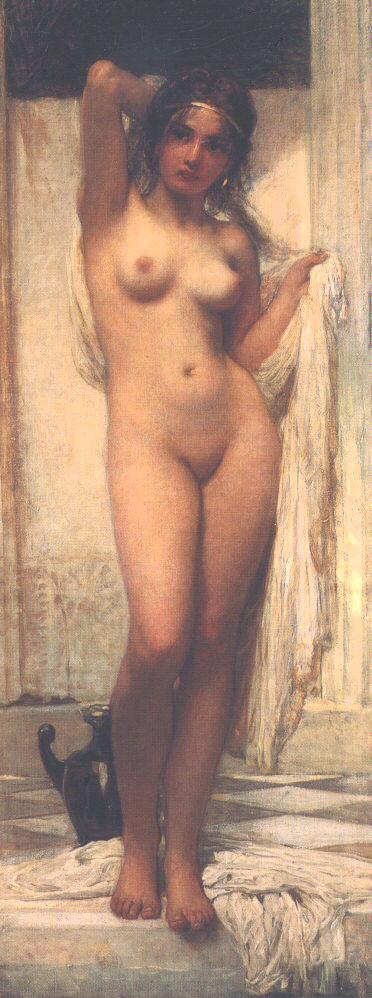
Károly Lotz, Hungarian National Gallery


Sorry for the shortage of updates this week. I've been scribbling notes in the margins of my thesis in advance of the viva, walking around a lot, and reading Proust in the bath. I've been looking up calls for papers in order to figure out who is going to be the unfortunate recipients of my thesis chapters. I've been getting rained on. I've been to see Ridley Scott's Body of Lies at a multiplex in the mall next to Nyugati Station (B+, Ridders), eating falafels and burritos and pastries, conceiving of articles for which I might plausibly be paid, fidgeting with a poem, and trying to muster the energy to sort my CV out properly. Mostly, though, I've been visiting museums. Yesterday we took in the National Museum, which helped fill in some of the gaps in my (fairly rudimentary) narrative of Magyar history, and on Tuesday I made a solo jaunt over the Erzsébet Híd (returning, incidentally, by the beautifiul Lánchíd at rush hour) to explore the dauntingly vast Hungarian National Gallery.

I'm sure I'm not the only one who suffers 'art fatigue' in big museums. Let's get things straight: as I've got older, I've fallen more and more in love with gallery-traipsing and, to my surprise, my preferences have shifted away from modernist painting (which isn't to say I don't enjoy and value it) to older works. I like battle scenes, Giotto frescoes, Piero della Francesca, apocalytpic Dutch paintings, Cotman, Turner, and - in particular - stuff from the latter half of the nineteenth century. It's the way realism shimmers on the edge of itself, not quite kitsch yet, but riddled with self-doubt. And yet it's also, truculently, not Cubism or Futurism.

Academic painting strikes me as particularly interesting because its techniques were adapted by figures who I'm perhaps more familiar with in my day-to-day interests, namely the surrealists. You find that Classicism in Dali, but for my own work, I've followed it more closely in Tristram Hillier and Paul Nash. Classicism's usefulness to the Surrealists is perhaps obvious: it has, precisely, an 'unrealistic' quality to the twentieth century mind when measured against the hurly-burly of Balla or Modigliani or Braque. When Clement Greenberg talks about academic painting as being kitsch, he is gesturing towards the unreality, even the archetypicality, that the surrealists found in it. Its 'life' had come to represent the dream-world.

So, via that digression...I do get art fatigue. By the 5th or 6th room of a big institution like the NPG or the Tate I'm looking without seeing, and my walking pace increases. So it's often something in the very first batch that grabs me. In this case, it was the work of Károly Lotz, a German-Magyar academic painter and muralist who died in 1904. What fascinated me is that each of his works seemed to have been created in the very last moment, art-historically speaking, in which they could not be entirely kitsch. He seemed to pass from Romantic-Naturalist themes that performed the characteristic early-nineteenth century gesture of ennobling the land and people of an imperially-subordinate country (see Stud in a Thunderstorm, of 1862, above) to quasi-decadent depictions of beautiful women lazing around naked in Hellenistic surrounds (see Bathing Woman, of 1901, below). Both strike we as rather wonderful examples of compromised realism; both would be amenable to a surrealist cannibilisation.

Anyway, that was Lotz. After that, I played an exciting game of grandmother's footsteps with the museum attendants (they love following me: why?) and gave the nineteenth century section another hour or so. By the time I staggered upstairs to look at Hungarian modernism, I was pretty much out of appreciation, so I'll start there next time. My problem with modernist art is its susceptibility to becoming derivative very quickly, and much I saw in there seemed at first to be in imitation of the 'big' interwar painters. Of course, this can be interesting in itself - so next time I'll have to avoid becoming sidetracked by Lotz's women (I'll forego the pun this time).

Anyway, I'll get more on here soon. Back in England for a fortnight on the 15th, to face THE VIVA.


Monday, 17 November 2008

A Slice of Nostalgia*


Muvesz is different now. Two years ago, when I was last in Budapest, the café, which occupies a prime position on the non-more-Habsburgian Andrássy Út, was dim, smoky, and snug. It might well have been Ilkley Bettys back in the Major years, perhaps, except with the Hungarian dailies, the Suddeutsche Zeitung, and the International Guardian on the newspaper hangers rather than the Daily Express and a 'Nidderdale Special' of Yorkshire Life. In other words, Muvesz belonged properly to last century, or at least to my image of the last century, which posits it as somehow alienating and homely, exotic and familiar, all at once.

I was in there this afternoon, following the flea market in the old communist community centre on the far side of the City Park. At the market, British boys in slim-fit jeans were fondling Lomo cameras and trying to craic with the stallholders. All young westerners visit the this place on the trail of dictator kitsch, and I'll freely (if shamefacedly) admit that such a pilgrimage would have appealed to me five or six years ago. What I suppose I mean by this is that I still find the market, the traders, and particularly the goods on sale - deactivated AKs, obsolete night sights, badges advertising membership of communist sports clubs, fall-of-the-wall vintage Bulgarian porn - fascinating, but I'm distinctly uncomfortable with the idea of picking up such items in an accumulation of ironic bounty. At best, I can credit such behaviour as concealing a nostalgia for a past in the west in which the junk-sifters did not participate; a nostalgia where communist-era Europe becomes a cipher for clearer, more comforting political demarcations than those we presently are asked to contend with. I suspect, somehow, that this isn't the case, and there's an element of jockish antagonism to this souveniring.

But am I really describing myself? In Muvesz, the coffee was still excellent, and the staff turned out to an almost parodic level of smartness, but the lights have been turned up and the fittings glint with flashes of a Slug & Lettuce. Most painfully, for me, the café bustle of two years ago has been masked with a too-loud soundtrack of limp breakbeats and acid jazz. I don't want this. I want to be in The Third Man; I want to be Stanley Ipcress eavesdropping on the neighbouring table while composing a shopping list for the ingredients of Bableves Jókai. I sat and ate my strudel - which was delicious, of course - and drank my coffee, and read Joseph Roth for its aptness, but it wasn't quite right.

Who am I, though, to make such demands? Perhaps the people of Budapest don't want to provide the stage setting for feelings which, I suppose, have much more to do with my own country than with theirs. Although, for me, the correlation between Roth's protestations for a more civilised, humane world and Kavehaz culture seem more than implicit, and that being assaulted by Jamiroquai while reading a passage like -

I always enjoyed reading about spiders, and about prisoners who wiled away the grim solitude of their cells with pet spiders. They stirred my imagination, which was a thing I had in abundance. I have always dreamed vividly, but with an alert mind. I never mistook my dreams for reality. And yet I can sometimes immerse myself in them so far that they become a second, an alternative reality -

is manifestly incongruous, I find it impossible to slough off an anxiety about my stake in or right to these essentially romantic images of eastern and central Europe.

I have mentioned her work often on here before, but Svetlana Boym's The Future of Nostalgia perhaps opens the way for a politics of what I'll facetiously call 'object relations' here. I'm currently writing a pair of reviews (one of Henry Green's Back, the other of Patrick Hamilton's The Slaves of Solitude) for Albion, an online magazine which advocates 'exploring Englishness'. Both novels, I argue, entertain Boym's 'reflective' nostalgia - a Proustian elegy for pastness - while rejecting the 'restorative' nostalgia of reactionary politics. Both play through the significations which are the currency of 'Englishness', and frame them as partially desirable, but refuse exclusive versions of 'national identity' (the idea which Roth became more and more hostile to as 1939 approached.) I might be talking about another country here, but I can't help but feel that the same questions are never far away when I touch upon topics such as the 'renovation' of Muvesz. What it was is something I would not equate with kitsch, but rather with a past which was worth preserving for its transnational values: a magic lantern in which one might glimpse various snapshots of European history.


* Pardon the pun. It was unavoidable.

Tuesday, 7 October 2008

Ruins, modernism, Baudelaire and utopias...

...these are a few of my favourite things.

Just realised that I'd never put up a link to the website of contemporary cultural/ architectural/ political critic and playwright Svetlana Boym, whose resuscitation of modernism and polemical defence of what Jean Starobinski calls 'reflective nostalgia' have played an important role in my thesis: please read her 'off-modernist' manifesto, which might be particularly interesting for any of you whose work involves readings of Jacques Derrida's account of 'hauntology'. I'll add it to the sidebar later. Anyway, she has a new book out, which I look forward to reading when the dust has settled.

Final supervision in forty minutes, when I'm going to be told how to cram a week's work into forty-eight hours.

Mogwai: Are Free

Well, not to download. But they have put the whole of their new album The Hawk is Howling up on MySpace, where I presume it shall remain for a few more weeks.

First impressions are that it's better than Rock Action and Happy Songs for Happy People and about equivalent to Mr. Beast (with plenty of 'grower' potential).

Monday, 6 October 2008

A surefire winner...

...if it induces a sense of extreme morbidity combined with a frisson of retrofuturist apocalypticism:

BBC release script to be used in the event of a nuclear attack.

Shudder.

Shudder.

Grrrgle.

I'm fascinated by the 'you cannot see it, you cannot feel it, but it is there' line. It contextualises the sixties-through-eighties preoccupation with the 'scientific' supernatural (Doctor Who, Hammer House of Horrors, The Stone Tape). I guess this line also sums up the remit of the BBC Radiophonic Workshop: 'it has no sensory presence, but how might one go about symbolising the absence of sensory presence in sound? If the nuclear age presents a kind of unrepresentable Real for language, how might sound narrate that crisis in representation?'

Well, Delia Derbyshire was either thinking that, or 'that would sound cool.'

Sunday, 5 October 2008

Worth a listen, at least

While admiring the second-generation music player on MySpace (that has to be the most, or only, web-familiar phrase I've ever composed) I noticed that My Bloody Valentine have their AMAZING cover of Wire's AMAZING song 'Map Ref 41N 93W' up at the moment. You shouldn't still be reading; that link should be open by now.

Joe

Query...

I need to advertise my teaching/ writing/ amateur football 'prowess' online. Can any of the tech-minded, new media savvy types who occasionally read this blog furnish me with tips for establishing a good-looking website without having to pay any money (or the least money possible) or write any HTML?

All advice to the comments box, please, where it will be very gratefully received.

Cheers,

Joe

Monday, 22 September 2008

A Modern Myth of Sisyphus...

...would feature the protagonist trying to paste documents that are already long into a massive Microsoft Word file whilst trying to preserve the formatting.

I would prefer the big fucking stone myself.