How one, admittedly crazy-sounding, Latvian politician saw the British after witnessing planeload after planeload of stag parties puking, pissing, and shagging their way around Riga, behaviour which has prompted the city's mayor to issue a public warning asking all-male groups from the UK to up their game a bit.
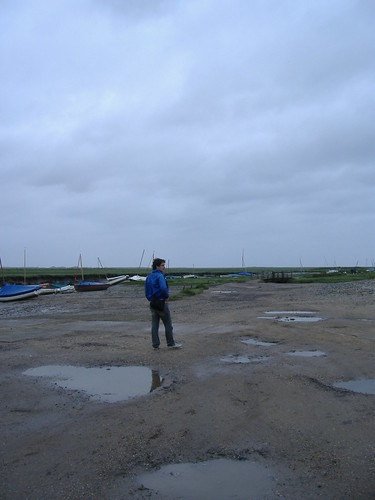
I have rather mixed feelings about this. Stag parties are not my thing, and the only one I ever went on involved a bunch of us playing pool in a cottage in Blakeney, having a kick-around, rescuing two small children from the salt marshes (long story), eating some lasagne, then heading back to Norwich full of bracing sea air. I could, I think, manage the 'rugged outdoor activities followed by one big night out in a UK city'-type affair, but the decidedly 2000s practice of decamping en masse to Central Europe, drinking Dreher or Krusovice until it comes out of one's eyeballs, then visiting extremely expensive strip & clip joints leaves me cold. Spending ten months in Budapest's District Seven, effectively the hub of the city's nightlife, has allowed me to witness a lot of these parties at first hand, and they're pretty grim. On our street there's a well-patronised, well-regarded romkert (typically, a squat-like bar set up in a disused building, decorated with furniture collected in the biannual district chuck-out) called Szimplákert. Now, Szimplákert has become, to a degree, a victim of it's own success, and even makes it onto the pages of the typically unadventurous Lonely Planet bar listings, with the result that big groups of Brits - or those smart enough to realise that they're being massively overcharged in the shiny, Square Mile-type bars on Liszt Tér - wind up there. Cue parades of middle managers in polo shirts decorated with 'hilarious', often borderline homophobic slogans ('Budapest 2009 - Gay-vin's Stag Do!' was a recent favourite), yelling at the barmaids in English, and competing with the local winos to see who can leave the biggest patch of vomit on my doorstep for me to step in come Saturday morning.
The thing is, though, that I can't help but feel that the British are scapegoated somewhat. I've seen plenty of Germans, Scandinavians, and Russians behaving identically in District Seven, the difference being that the British only seem to act up when under the influence. When sober, most English people at least demonstrate a degree of embarrassment about their unwillingness to take the plunge with Hungarian, whereas I frequently see Germans snap at shop or café workers (in English or German) then descend into fits of mirth at their addressee's inability to respond. What price a guy from Szeged or Miskolc walking into a bar in Hamburg, rattling off an order in Hungarian, and expressing complete incredulity at his failure to be understood?
I've often asked my students, and people I meet around and about, what their stereotype of an English (or Scottish - they don't often differentiate) person is. Sample answers: 'a snob'; 'an alcoholic'; 'a football hooligan'. The latter I find intriguing - I would have gone along to see Újpest or Fradi by now were their stadiums not more or less given over to Drehered-up ultra groups (witness the behaviour of Újpest's 'boys' as they host cross-border rivals Steaua Bucharest in the Europa League a few weeks back): by way of comparison, I've very rarely felt intimidated either within or en route to any English ground. I do feel that the British, and in particular the English, are frequently asked to take the rap for forms of behaviour which are endemic throughout the whole of Europe. I admit that I feel safer walking around downtown Budapest at three in the morning than I do walking through Norwich's leafy suburbs anytime after eight, but I hardly think antisocial behaviour is a problem exclusive to the UK.
Showing posts with label travel writing. Show all posts
Showing posts with label travel writing. Show all posts
Wednesday, 5 August 2009

Tuesday, 10 February 2009
Self and Sinclair! Head to Head!
My friend Chris, or Attic Fantasist as he's known for blogging purposes, has beaten me to this, but the two most visible literary representatives of psychogeography in the UK both feature prominently in last weekend's newspapers. Firstly, Will Self describes his 'growing affinity' with fellow tramper - although, as AF points out, he would probably have resisted the 'psychogeography' tag - W. G. Sebald in a frankly curious Guardian article. Secondly, Rachel Cooke does a much more sensible piece on Iain Sinclair, in which she walks around Hackney with him in anticipation of his new book That Rose-Red Empire. Sinclair has, in the past, been slightly disparaging about Self's somewhat posturing take on psychogeography, which - as I understand it - runs the risk of making its theory and practice overly co-optable (Self might retort that Sinclair is one to talk, of course). Here's a chance, then, to compare and contrast their ideas as they are represented in the mainstream media...
Lots of Sebald features about recently, isn't there?
Lots of Sebald features about recently, isn't there?
Friday, 7 November 2008
23 KG (Plus hand baggage)
1 Chelsea boot - 1 KG
1 lemon yellow t-shirt (small) - 150G
Walter Benjamin, Berlin Childhood Around 1900 - 225G
Belt (black, not karate) - 140G
One University of East Anglia PhD thesis, pending viva - 1.6KG
1 lemon yellow t-shirt (small) - 150G
Walter Benjamin, Berlin Childhood Around 1900 - 225G
Belt (black, not karate) - 140G
One University of East Anglia PhD thesis, pending viva - 1.6KG
Tuesday, 3 June 2008
D-U-C Travel Writing Awards Spectacular Third Instalment: Football
I would call this category 'Sports Travel Writing' but for two reasons. Firstly, 'Sports' can indicate participation as well as observation, which would mean that all cycling-based travelogues would become (kind of) eligible. Seeing as this category is about the way in which sport's investment with meaning can tell us something about the psyche of a country or region, and cycling around a country or region and writing about it doesn't give us the same perspective, I've placed an embargo on 'sport as a mode of travelling' narratives. Secondly, and feel free to argue this if you like, I feel that football writing at its best offers readings of places in microcosm that analyses of rugby- just to pick an example out of a hat- never will. While I appreciate that the idiosyncrasies of certain countries may crop up in their sporting pursuits (hurling, shinty, bullfighting...), football is a level playing field*, a lens which allows for the examination of a variety of cultures. Plus, I have next to no interest in other sports and a very short attention span. And I haven't read Death in the Afternoon.
Anyway, there is a big shortlist here. A lot of people would go for Tim Parks's A Season with Verona, which details the adventures of the author (a professor of literature in Milan) as he tours Italy with Hellas Verona's hardcore. ASV is 'about' lots of things apart from what happens on the pitch, although the actual football ends up lending the book a novelistic narrative structure as Hellas escape the drop into Serie B with a second leg play-off win against Reggina in the Mezzogiorno. Parks deals with the prioritising of regional over national identities that he (rather paradoxically) sees as being Italy's defining characteristic, with the 'rhetorical, figural potential' (cf. Paul de Man, Allegories of Reading) of the game, with racism and anti-semitism, with the sublimation of violence into sport (via Cesare Pavese), and with the contradictions and self-deceptions that are inherent in sporting fandom. It really is a very good book. There's also The Miracle of Castel di Sangro by Joe MacGinnis, the tale of a side from the backwoods of the Abbruzzan Apennines who make it to Serie B against all the odds (the English equivalent would be a level 10 team reaching the Championship). MacGinnis doesn't know his football as well as Parks, and he's also less up to speed on Italian culture, but, once again, the sheer weirdness of the club's season lends to the book the feel of a novel. The characters are all larger than life, even though we know they're real, and they all seem to be mired in corruption, indicating that MacGinnis has a Raban-esque feel for the tawdrier side to his subjects. An honourable mention also to Jonathan Wilson's Behind the Curtain, which is the story of football in eastern Europe before and after 1989.
The winner, though, is closer to home. Harry Pearson's The Far Corner has more modest aspirations than Parks or MacGinnis- its author clearly has anthropological interests (he discusses Mass Observation, amongst other things), but doesn't seek to turn them into omniscient philosophical readings of the world. It's geographical scope is locked, more or less, between the Tees and the Tweed, and it is fundamentally episodic rather than driven by the structure of the season. Over the course of the 1993/1994 campaign, Pearson visited a variety of north-east clubs, ranging from the great (Keegan-era Newcastle United) to the mediocre (Darlington, Hartlepool) to the absolutely miniscule (West Allotment Celtic of the Northern Alliance). Though he never explicitly states it either in The Far Corner or its unofficial sequel , Racing Pigs and Giant Marrows (which consisted of a series of outings to country fairs in Durham, North Yorkshire, Northumberland and Cumbria), Pearson's objective is to give some account of the identity of the 'real north'. While the likes of Paul Morley, Simon Armitage, David Peace, Stuart Maconie and Bill Drummond have tended to create a symbolic geography of English northerness which is based along the M62 corridor, and is centred on Leeds and Manchester, Pearson- as the title implies- writes about the less well-known lands beyond the A66.
County Durham and Northumbrian dialects are way more detached from RP than the bristly north midlands twang one finds along the M62, and are in many ways closer to Scots. Geordie and Ptmatic are the English equivalents of Occitan, Sorbian or Sardinian, and would probably be afforded language status in a country less politically obsessed with the notion that all those who live within its boundaries must have a common linguistic identity. Phonetically, Italian and Romanian have more in common than the accents of Southend and Sunderland or Bexley and Blyth. Pearson digs out this difference by chasing up specifically north-eastern pursuits and obsessions. Although he visits all the region's league clubs, as well as a couple of sides who were then in the higher reaches on the non-league game such as Gateshead**, Bishop Auckland and Spennymoor, his main focus is on the delightful and deranged world of the Northern League. If those words would, to an Italian, suggest a weird right-wing separatist party, they have some of the same connotations in this case. In most parts of the country, football below Step 4 (the regional leagues a couple of divisions below the Conference) isn't very important, and attendances frequently drop below 20. By contrast, the Northern League is something of a cause celebre once one passes Northallerton (home to its most southerly club). Although the higher attendances- for derby games and season finales- aren't enormously high by the standards of the level, most teams pull over 100 fans on average, and an average NL weekend will see a couple of thousand people watching games in old pit villages such as Esh Winning, Crook, and Horden. The league has a particular draw for non-league football pervs, and at least one weekend a season is scheduled so that the groundhoppers (some of whom have to cross time zones to be there) will be able to take in several matches, as well as- one would have thought- numerous pints of real ale.
However ideal this might all sound, there is a problem. While most of the Step 5 leagues have regularly launched clubs up the Pyramid system, occasionally seeing their former charges (Accrington, Rushden & Diamonds) reach the Promised Land of the Football League, the NL has failed to promote for something like 13 of its last 18 seasons. Most of its champions have declined promotion on the grounds of the costs of travelling to places like Manchester and Staffordshire for pointless midweek games, but the league committee also clings onto its members like acrumbling empire opposing secession. Consequently, the 'Far Corner' is woefully under-represented at the higher levels on the national non-league game. When the Conference (then known as the Alliance) was first formed- or so the story goes- the NL was offered the chance to become a fever at an equivalent level with the Northern Premier League (to which it now, in theory, promotes to) and the Southern League. Presumably, this offer was made on the basis of the disproportionate success of the NL clubs in the Amateur Cup and (later on) the FA Vase, although there was a strong tradition of the area's clubs reaching the early rounds of the FA Cup proper as well: Blyth Spartans, famously, made it all the way to Round 5 in the late 70s. If the NL had accepted the Alliance's offer, the north-east would still to this day be jammed with teams from the Durham and Northumbria, and it doesn't take a great stretch of the imagination to conceive of teams like Blyth, Spennymoor or Durham City gaining enough impetus to acquire league status.
Instead, as Pearson wonderfully evokes, the game in the north-east has become introverted and frankly surreal. Meat packets are offered as half-time raffle prizes, a mysterious paragon of footballing jargon is encountered in the North Sea winds at Seaham, and Pearson is accosted on a bus in Rowland's Gill by that most stereotypically north-eastern of figures, the 'price of beer bore' who knows the cost of a pint of Camerons in every licensed establishment from Piercebridge to Bamburgh. The north-eastern football fan (and by extension, all the people of the north-east) is characterised as witty, cynical, friendly and gifted with a profound understanding of the importance of the minutiae of life. The Far Corner is, like Orwell's 'The Lion and the Unicorn', a study in Englishness, but it seeks to turn the Orwellian/ John Major-ian vision of 'old maids biking to Holy Communion through the mists of the autumn morning' on its head: as Pearson points out, that isn't the vision of home that occurs to most Geordies or Mackems when they're exiled (as he was) in an off-licence on the Old Kent Road.
Anyway, this eulogy probably needs to stop now. Read it, even if you're not a football fan- it will still make plenty of sense.
* Yes, please excuse the awful pun.
** Who are, happily, on their way back up now, with a new ground on the way.
Anyway, there is a big shortlist here. A lot of people would go for Tim Parks's A Season with Verona, which details the adventures of the author (a professor of literature in Milan) as he tours Italy with Hellas Verona's hardcore. ASV is 'about' lots of things apart from what happens on the pitch, although the actual football ends up lending the book a novelistic narrative structure as Hellas escape the drop into Serie B with a second leg play-off win against Reggina in the Mezzogiorno. Parks deals with the prioritising of regional over national identities that he (rather paradoxically) sees as being Italy's defining characteristic, with the 'rhetorical, figural potential' (cf. Paul de Man, Allegories of Reading) of the game, with racism and anti-semitism, with the sublimation of violence into sport (via Cesare Pavese), and with the contradictions and self-deceptions that are inherent in sporting fandom. It really is a very good book. There's also The Miracle of Castel di Sangro by Joe MacGinnis, the tale of a side from the backwoods of the Abbruzzan Apennines who make it to Serie B against all the odds (the English equivalent would be a level 10 team reaching the Championship). MacGinnis doesn't know his football as well as Parks, and he's also less up to speed on Italian culture, but, once again, the sheer weirdness of the club's season lends to the book the feel of a novel. The characters are all larger than life, even though we know they're real, and they all seem to be mired in corruption, indicating that MacGinnis has a Raban-esque feel for the tawdrier side to his subjects. An honourable mention also to Jonathan Wilson's Behind the Curtain, which is the story of football in eastern Europe before and after 1989.
The winner, though, is closer to home. Harry Pearson's The Far Corner has more modest aspirations than Parks or MacGinnis- its author clearly has anthropological interests (he discusses Mass Observation, amongst other things), but doesn't seek to turn them into omniscient philosophical readings of the world. It's geographical scope is locked, more or less, between the Tees and the Tweed, and it is fundamentally episodic rather than driven by the structure of the season. Over the course of the 1993/1994 campaign, Pearson visited a variety of north-east clubs, ranging from the great (Keegan-era Newcastle United) to the mediocre (Darlington, Hartlepool) to the absolutely miniscule (West Allotment Celtic of the Northern Alliance). Though he never explicitly states it either in The Far Corner or its unofficial sequel , Racing Pigs and Giant Marrows (which consisted of a series of outings to country fairs in Durham, North Yorkshire, Northumberland and Cumbria), Pearson's objective is to give some account of the identity of the 'real north'. While the likes of Paul Morley, Simon Armitage, David Peace, Stuart Maconie and Bill Drummond have tended to create a symbolic geography of English northerness which is based along the M62 corridor, and is centred on Leeds and Manchester, Pearson- as the title implies- writes about the less well-known lands beyond the A66.
County Durham and Northumbrian dialects are way more detached from RP than the bristly north midlands twang one finds along the M62, and are in many ways closer to Scots. Geordie and Ptmatic are the English equivalents of Occitan, Sorbian or Sardinian, and would probably be afforded language status in a country less politically obsessed with the notion that all those who live within its boundaries must have a common linguistic identity. Phonetically, Italian and Romanian have more in common than the accents of Southend and Sunderland or Bexley and Blyth. Pearson digs out this difference by chasing up specifically north-eastern pursuits and obsessions. Although he visits all the region's league clubs, as well as a couple of sides who were then in the higher reaches on the non-league game such as Gateshead**, Bishop Auckland and Spennymoor, his main focus is on the delightful and deranged world of the Northern League. If those words would, to an Italian, suggest a weird right-wing separatist party, they have some of the same connotations in this case. In most parts of the country, football below Step 4 (the regional leagues a couple of divisions below the Conference) isn't very important, and attendances frequently drop below 20. By contrast, the Northern League is something of a cause celebre once one passes Northallerton (home to its most southerly club). Although the higher attendances- for derby games and season finales- aren't enormously high by the standards of the level, most teams pull over 100 fans on average, and an average NL weekend will see a couple of thousand people watching games in old pit villages such as Esh Winning, Crook, and Horden. The league has a particular draw for non-league football pervs, and at least one weekend a season is scheduled so that the groundhoppers (some of whom have to cross time zones to be there) will be able to take in several matches, as well as- one would have thought- numerous pints of real ale.
However ideal this might all sound, there is a problem. While most of the Step 5 leagues have regularly launched clubs up the Pyramid system, occasionally seeing their former charges (Accrington, Rushden & Diamonds) reach the Promised Land of the Football League, the NL has failed to promote for something like 13 of its last 18 seasons. Most of its champions have declined promotion on the grounds of the costs of travelling to places like Manchester and Staffordshire for pointless midweek games, but the league committee also clings onto its members like acrumbling empire opposing secession. Consequently, the 'Far Corner' is woefully under-represented at the higher levels on the national non-league game. When the Conference (then known as the Alliance) was first formed- or so the story goes- the NL was offered the chance to become a fever at an equivalent level with the Northern Premier League (to which it now, in theory, promotes to) and the Southern League. Presumably, this offer was made on the basis of the disproportionate success of the NL clubs in the Amateur Cup and (later on) the FA Vase, although there was a strong tradition of the area's clubs reaching the early rounds of the FA Cup proper as well: Blyth Spartans, famously, made it all the way to Round 5 in the late 70s. If the NL had accepted the Alliance's offer, the north-east would still to this day be jammed with teams from the Durham and Northumbria, and it doesn't take a great stretch of the imagination to conceive of teams like Blyth, Spennymoor or Durham City gaining enough impetus to acquire league status.
Instead, as Pearson wonderfully evokes, the game in the north-east has become introverted and frankly surreal. Meat packets are offered as half-time raffle prizes, a mysterious paragon of footballing jargon is encountered in the North Sea winds at Seaham, and Pearson is accosted on a bus in Rowland's Gill by that most stereotypically north-eastern of figures, the 'price of beer bore' who knows the cost of a pint of Camerons in every licensed establishment from Piercebridge to Bamburgh. The north-eastern football fan (and by extension, all the people of the north-east) is characterised as witty, cynical, friendly and gifted with a profound understanding of the importance of the minutiae of life. The Far Corner is, like Orwell's 'The Lion and the Unicorn', a study in Englishness, but it seeks to turn the Orwellian/ John Major-ian vision of 'old maids biking to Holy Communion through the mists of the autumn morning' on its head: as Pearson points out, that isn't the vision of home that occurs to most Geordies or Mackems when they're exiled (as he was) in an off-licence on the Old Kent Road.
Anyway, this eulogy probably needs to stop now. Read it, even if you're not a football fan- it will still make plenty of sense.
* Yes, please excuse the awful pun.
** Who are, happily, on their way back up now, with a new ground on the way.
Monday, 2 June 2008
D-U-C Travel Writing Awards Spectacular- Part the Second: Soul Searching
Raban also inspires ambivalence: Bryson implies that he isn't a huge fan, and his writings do often give the impression that he hunts out unpleasantness for subject matter rather than letting it occur on its own terms. For me, this isn't necessarily a problem- it's alright for travel writing to be a medium whose findings confirm a worldview- but I have often been uncomfortable with his pernickety willingness to find fault with the (numerous) people who give him hospitality. Also, though his political stances are often to be agreed with, he isn't really one for grey areas or relativism in this quarter. It often seems as though he's going to lose his rag with the inhabitants of Tennessee for as little as not having a Guardian in the newspaper rack.
Old Glory is the story of a journey down the Mississippi in a dangerously small boat. There's a long hiatus in the middle where Raban takes up with a wealthy Jewish woman in St. Louis (or does he? There's something of the shaggy dog about the book), which gives him ample opportunity to discuss Middle Eastern affairs. Everything takes place against the backdrop of the end of the Carter presidency and, inevitably, the Iran hostage crisis looms large: Raban presents a picture of a nation extremely at odds with itself. The river, Old Glory itself, is obviously over-determined as an element of a symbolic geography or psychic topography, but the metaphor is kept motivated with digressions that subvert what, in less capable hands, might be an irritating or pious idea of eschatology. There's also a subtle way in which one is never just moving downstream but drifting back and forth across it, which makes Old Glory read a little like a dream diary at times.
In a way, though, this is precisely what it is. Raban is in Emersonian mode, and the experience of the American frontier represents all kinds of psychological extremes as well. We aren't always comfortable with the co-opting of the "real" of landscape into the service of the individual whinge (although it worked for Coleridge) but it works here.
Friday, 30 May 2008
D-U-C Travel Writing Awards Spectacular...#1: Comedy
Well, not that spectacular. I've just found two sections from an unpublished post from last year. The idea had been to make a feature about my favourite pieces of travel writing sorted by category. Given that I was making it up on the spot, I'm not sure the winners are actually correct, but what can you do. Anyway, the first award in this very occasional series is for travel writing of a comic bent:
* * * *
COMIC
Bill Bryson, A Walk in the Woods
I often get the feeling that many travel writing afficionados look down on Bryson somewhat. The glossy covers, the mass readership, the sheer mid-Atlantic breeziness of it all - unlike the frequently heavy-handed Paul Theroux, Bryson is predominantly interested in mining the comic potential of the American abroad - all seem to conspire to put people off. What I think is great about Bryson is the unadulterated childishness of his writing, meaning that he seems to locate some kind of Burkean sublime in everything from a Swedish Roll-on Roll-off ferry to a waste paper basket in Dover to an epiphany on the Bosphorus at dusk. Bryson spoils himself in A Walk in the Woods, choosing as his subject matter the mindbendingly lengthy Appalachian Trail, a hiking footpath which wends and winds all the way from northern Georgia to the Canadian border in Maine. The path passes over some of the highest mountains in the eastern United States, and through some of the vastest wildernesses on that side of the Rockies. There's bears, snakes, poisonous deer ticks and unhinged hillbillies to deal with along the way, as if the strenuous walking, sub-zero camping and endless stove food wasn't enough.
Bryson, clearly a capable traveller, would probably have breezed it if he'd gone alone. However, shortly before setting out on his expedition, panic set in, and he decided to footnote all of his Christmas cards with an invitation to accompany him on the walk. Clearly, the gods were looking kindly on his publishers, as the only respondent was an old, seriously overweight college friend with alcohol and drug "issues". "Hilarious consequences" ensue.
However, the jokes (many of which, unsurprisingly, come at the increasingly "tested" accomplice's expense) are matched by a sensitive affinity for the environment in which he finds himself, in both a natural and a human sense. There's a measure of quiet outrage towards the American government over the "secret" poverty of the rural South, which is backed up by a warmth towards its inhabitants (a favourite scene depicts an exhausted Bryson and friend hitching a lift off a just-wed pair of drunkards). On top of this, the book is full of unexpected nuggets of American history which are imbued with the kind of ironic touch The Guardian would have us believe is not commonplace over the pond.
* * * *
COMIC
Bill Bryson, A Walk in the Woods
I often get the feeling that many travel writing afficionados look down on Bryson somewhat. The glossy covers, the mass readership, the sheer mid-Atlantic breeziness of it all - unlike the frequently heavy-handed Paul Theroux, Bryson is predominantly interested in mining the comic potential of the American abroad - all seem to conspire to put people off. What I think is great about Bryson is the unadulterated childishness of his writing, meaning that he seems to locate some kind of Burkean sublime in everything from a Swedish Roll-on Roll-off ferry to a waste paper basket in Dover to an epiphany on the Bosphorus at dusk. Bryson spoils himself in A Walk in the Woods, choosing as his subject matter the mindbendingly lengthy Appalachian Trail, a hiking footpath which wends and winds all the way from northern Georgia to the Canadian border in Maine. The path passes over some of the highest mountains in the eastern United States, and through some of the vastest wildernesses on that side of the Rockies. There's bears, snakes, poisonous deer ticks and unhinged hillbillies to deal with along the way, as if the strenuous walking, sub-zero camping and endless stove food wasn't enough.
Bryson, clearly a capable traveller, would probably have breezed it if he'd gone alone. However, shortly before setting out on his expedition, panic set in, and he decided to footnote all of his Christmas cards with an invitation to accompany him on the walk. Clearly, the gods were looking kindly on his publishers, as the only respondent was an old, seriously overweight college friend with alcohol and drug "issues". "Hilarious consequences" ensue.
However, the jokes (many of which, unsurprisingly, come at the increasingly "tested" accomplice's expense) are matched by a sensitive affinity for the environment in which he finds himself, in both a natural and a human sense. There's a measure of quiet outrage towards the American government over the "secret" poverty of the rural South, which is backed up by a warmth towards its inhabitants (a favourite scene depicts an exhausted Bryson and friend hitching a lift off a just-wed pair of drunkards). On top of this, the book is full of unexpected nuggets of American history which are imbued with the kind of ironic touch The Guardian would have us believe is not commonplace over the pond.
Subscribe to:
Posts (Atom)